How to keep an indoor cat busy without wrecking your evenings
Play like prey, not like a metronome
Cats lose interest in predictable motion fast. The toys that keep working move irregularly, dart, pause, and change direction, so the stalk stays interesting. Run each session as a hunt with bursts and stillness, and let your cat actually catch the toy at the end, because a hunt with no catch is just frustration. Two or three ten-minute sessions, especially in the evening energy spike, absorb the zoomies that otherwise land at 3 a.m.
Give the claws an approved target
Scratching is not optional for a cat; the only question is what they scratch. A sturdy scratcher tall enough for a full upward stretch gives the daily rake-and-stretch ritual a designated home, which is exactly the ritual that otherwise lands on couch arms and rug corners. Place it right next to the current target at first, not across the room, and it absorbs most of the furniture scratching on its own.
The retreat matters as much as the chase
After the hunt comes the withdrawal. A covered bed gives your cat the dim, enclosed spot they otherwise build out of closets and cardboard boxes, somewhere warm that holds their scent and lets them switch off. Cats with a proper retreat are typically easier to live with in the evening, because they take the wind-down there instead of patrolling.
Rotate, do not accumulate
Three toys in rotation beat ten toys in a basket. Put motion toys away between sessions so they stay novel, check moving parts and feathers for wear, and retire anything that starts shedding pieces. The goal is a small set of reliable routines your evenings can absorb.
Products mentioned
See all comfort picks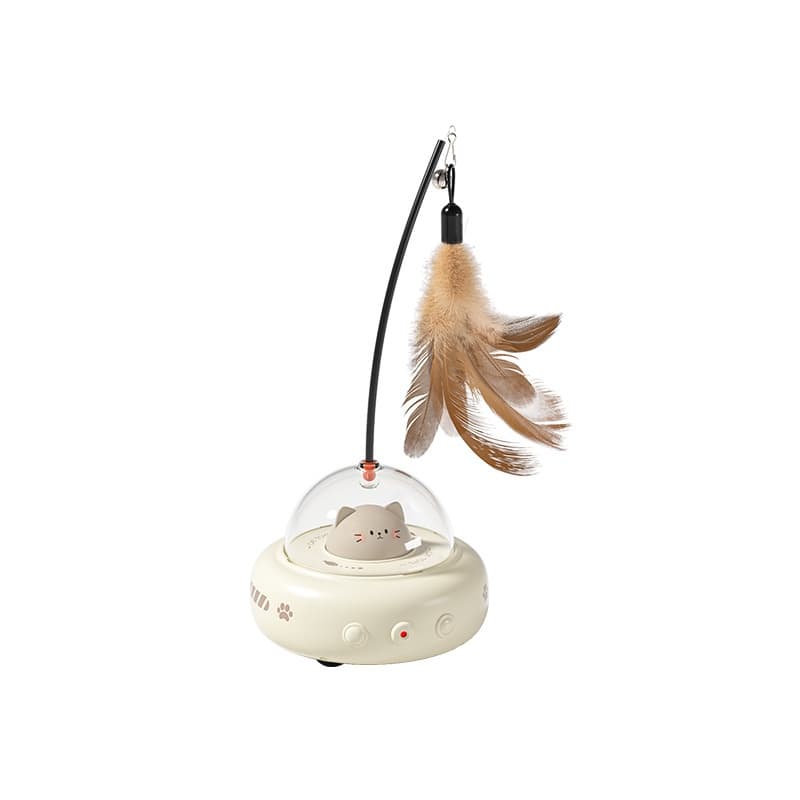
Smart Teaser Cat Toy Electric UFO Cat Teaser
Keeps the chase interesting after the tenth session.
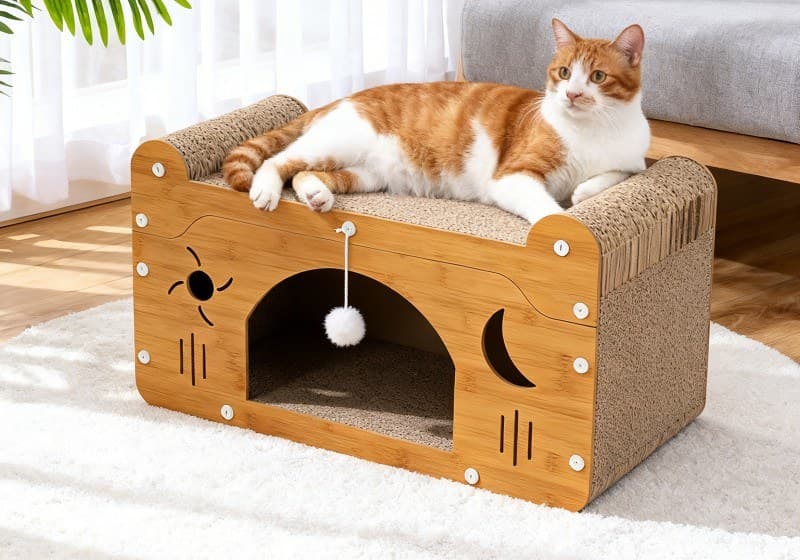
Star & Moon Cutout Cat Scratcher Couch
The daily stretch-and-rake ritual, moved off your furniture.
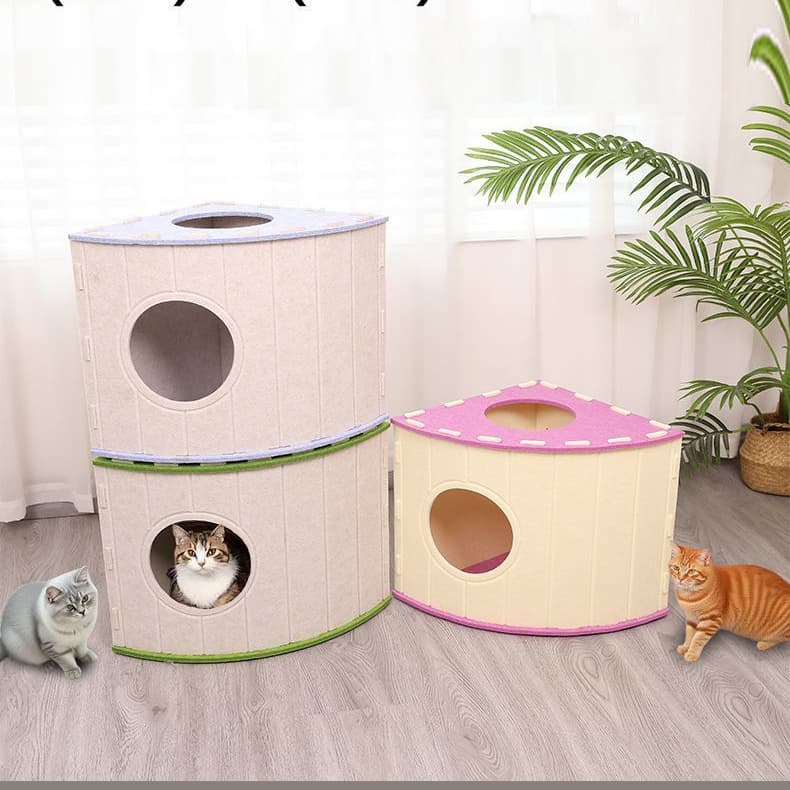
Enclosed Large Scratch-Resistant Calming Pet Bed
A covered hideaway for cats who nap best out of sight.
How we evaluate
We evaluate cat gear by attention held across repeated sessions, stability and materials from the spec sheet, and whether each piece genuinely replaces a behavior aimed at your furniture. We avoid claims about behavior outcomes we cannot verify.
Questions pet parents ask
How much play does an indoor cat need?
Most adult cats do well with two or three short sessions a day. Kittens want more; seniors may prefer gentler, slower motion.
Are electric cat toys safe to leave running?
Use them for supervised sessions, inspect moving parts for wear, and put them away between hunts. No motion toy should run unattended all day.
Will a scratcher stop couch scratching?
It usually redirects most of it, especially placed near the scratched spot at first. Pair it with trimming and patience rather than expecting an overnight fix.
Related guides
Best interactive cat toys for home-alone cats
For a cat who spends workdays alone, the Smart Teaser UFO Cat Toy is the best single buy at $16: irregular darting motion that reads as prey, session after session.
Why is my cat scratching the couch?
Your cat scratches the couch because it is sturdy, tall, covered in grippy fabric, and placed at the social center of the home: everything a scratcher should be.
New kitten checklist: a real setup under $150
A kitten's first weeks need a retreat, water, paced meals, and play, covered for $144: the Enclosed Large Scratch-Resistant Calming Pet Bed at $42, the Ultra Silent Circulating Pet Drinking Fountain at $56, the 2-In-1 Dual Mode Cat Slow Feeder at $32, and the Electric Jumping Fish toy at $14.