Slow feeder vs puzzle feeder: which one for a dog who gulps?
Two tools, two different jobs
A slow feeder is a bowl with obstacles: ridges and channels that force a dog to eat around them, so every meal takes minutes instead of seconds, automatically, with nothing to learn. A puzzle feeder is a game that pays out in food: the dog manipulates, noses, or rolls something to earn each portion. The slow feeder's job is pacing; the puzzle's job is mental work. They overlap just enough to get confused with each other in search results, and choosing the wrong one for a gulper leads to a device in a cupboard.
Why gulping is worth fixing at all
A dog who inhales meals swallows air along with food, which shows up as burping, hiccuping, and sometimes regurgitating a meal that went down too fast to land. Beyond the mess, rapid eating is one of the risk factors veterinarians discuss for bloat in large, deep-chested breeds, which is reason enough to take a gulping habit seriously rather than treating it as comedy. Slowing the meal is one of the few interventions that costs almost nothing and works at every meal without your involvement.
Why the slow feeder wins for gulpers
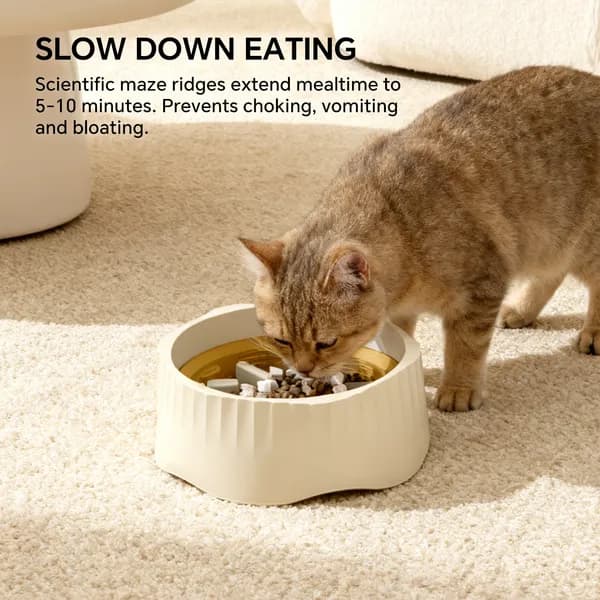
The slow feeder works on the first meal and every meal after, because the dog cannot opt out: the ridges set the pace no matter how enthusiastic the eater. The Dual-Purpose Slow Food Bowl's 8-inch maze pattern does this for dogs, and the 2-In-1 Dual Mode Large Plastic Cat Slow Feeder brings the same idea to cats who treat dinner as a race. A puzzle feeder, by contrast, asks a hungry, impatient dog to solve something before eating, and a determined gulper's usual solution is to flip the device and vacuum the results off the floor.
Where a puzzle feeder genuinely earns its place
Once mealtime speed is under control, a puzzle has real value as a boredom tool: it turns a portion of food into fifteen minutes of occupied dog on a rainy afternoon, and thoughtful dogs genuinely enjoy the work. Start with easy settings so the game pays out fast, supervise the first sessions, and treat it as scheduled enrichment rather than the daily feeding method. If your dog has never used one, introduce it when they are calm rather than ravenous, which stacks the first impression in the puzzle's favor.
Setup details that make or break the bowl
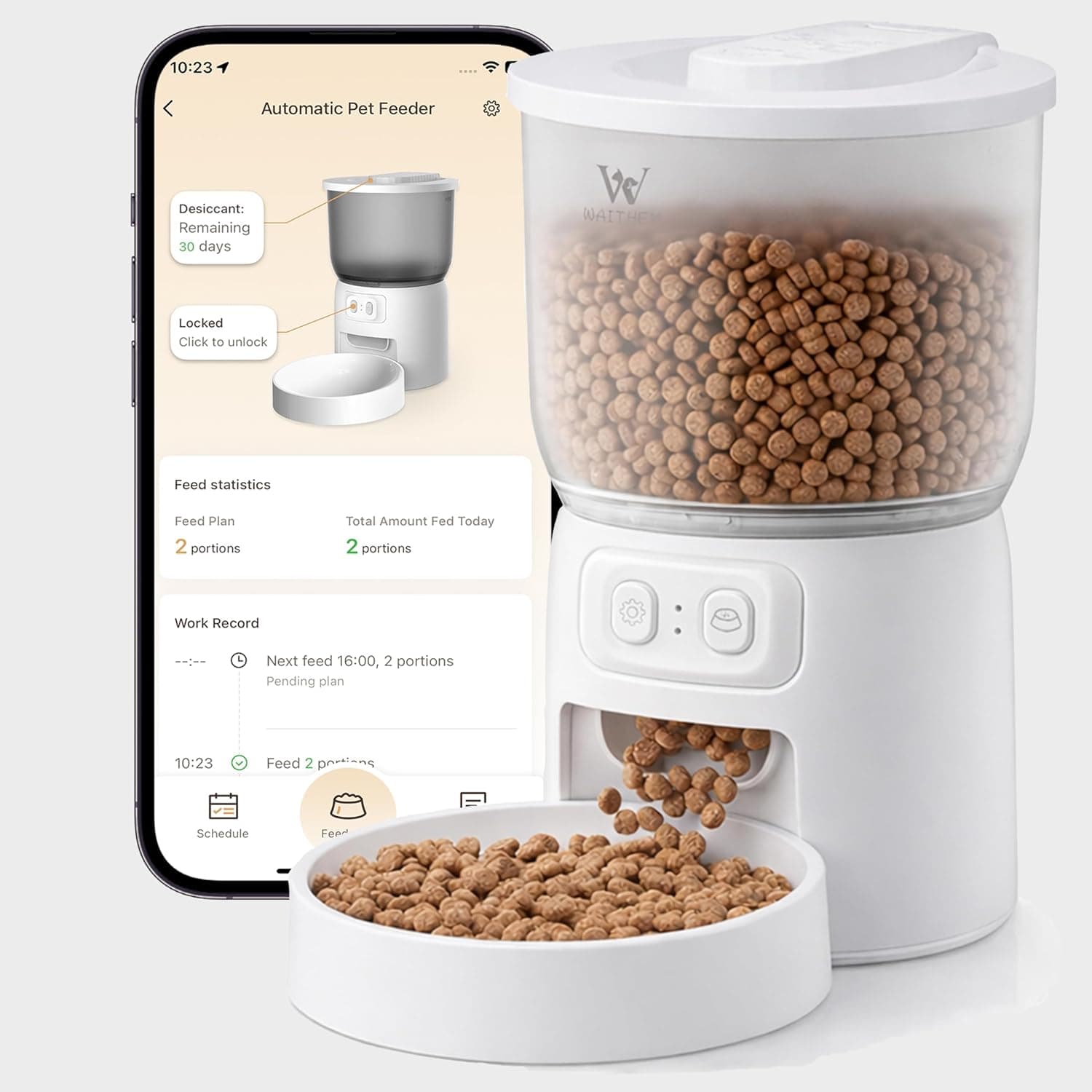
Match ridge depth to snout: deep mazes frustrate flat-faced breeds, which need a shallower pattern, and the pattern should be challenging without being punishing. Wet food works in a slow feeder too; smear it into the channels rather than mounding it on top. If the bowl skids while an excited dog works at it, place it on a mat. And if meals need to happen on schedule while you are out, an automatic feeder like the Waithem Wi-Fi Automatic Pet Feeder can dispense the portion that the slow bowl then paces.
Products mentioned
See all comfort picks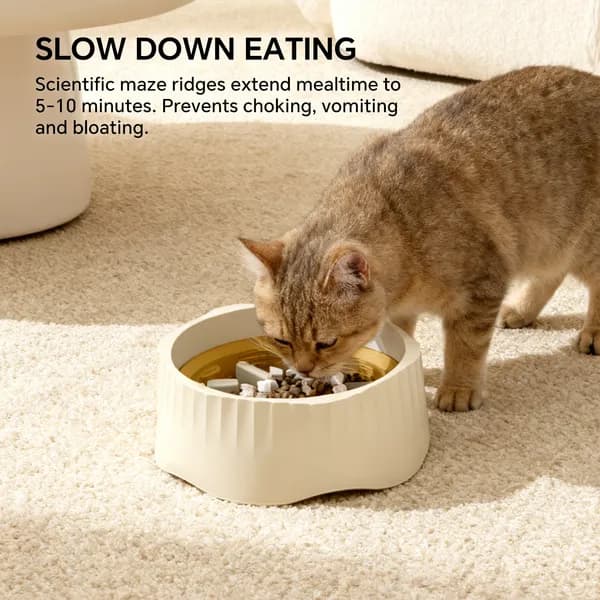
Dual-Purpose Slow Food Bowl
Ridges that make fast eaters slow down and taste it.
2-In-1 Dual Mode Large Plastic Cat Slow Feeder
Turns thirty-second gulping into a calmer, safer meal.
Waithem Wi-Fi Automatic Pet Feeder
Meals on schedule, even when your schedule slips.
How we evaluate
We compare product categories by the problem they solve, tested with real meals and the products' published specs. Health context is stated conservatively and deferred to veterinarians; we do not claim any bowl prevents a medical condition.
Questions pet parents ask
Do slow feeders frustrate dogs?
Briefly, sometimes, in the first meals. Most dogs adapt within days and settle into the slower rhythm. Choose a shallower pattern for flat-faced breeds and check that your dog can actually reach the food at the channel bottoms.
Can cats use slow feeders?
Yes. Gulping and its aftermath are common in cats too, and a cat-scaled ridge pattern like the 2-In-1 Dual Mode feeder paces them the same way. Keep the pattern shallow for flat-faced cats.
How much slower does a slow feeder make meals?
Expect a meal that vanished in under a minute to take several minutes instead. The exact pace depends on the ridge pattern, the food, and the dog's determination.
Can I use a slow feeder for wet food?
Yes. Press the food into the channels instead of piling it on top, and rinse the bowl promptly after; ridged bowls hold residue in the corners longer than flat ones.
Related guides
How to stop a dog from gulping food
The fastest fix is a ridged bowl: the Dual-Purpose Slow Food Bowl makes a gulper work around obstacles, stretching a meal from seconds to minutes.
How to build a calmer pet corner
A calmer pet corner needs three things: a plush bed placed where your pet already relaxes, water a step away from the bedding, and meals that slow down instead of spiraling.