Do cooling mats actually work for dogs?
What a passive mat actually does
An ice-silk mat has no gel, water, or power cord. It works by conduction: the smooth, dense weave moves heat away from whatever touches it faster than plush fabric does, so it feels cooler against a warm body, the same physics that makes tile feel cool while carpet feels warm. That is the whole mechanism, and it is enough for the problem it addresses, which is a dog whose bedding traps heat. The mat does not get cold; it just stops insulating.
What it will not do
A cooling mat will not lower the room temperature, will not compensate for a car or a crate in the sun, and is not a treatment for anything. A dog showing real overheating signs, heavy relentless panting, drooling, wobbliness, or lethargy, needs a veterinarian, not a shopping decision. Shade, fresh water, and sensible limits on hot-day exercise remain the actual heat-safety tools; the mat is comfort layered on top of them, never a substitute.
The dog decides whether it works
The clearest predictor of success is whether your dog already seeks cool surfaces. A dog who abandons the bed for tile, bathroom floors, or shaded concrete is a strong candidate; the mat gives them that sensation without the hard floor. Contact area is the other variable: cooling only happens where the body touches the mat, so it should be large enough for the chest and belly at minimum. Lay it exactly where the dog already flops, since the mat cannot outcompete a favorite spot from across the room.
Which mat for which situation
For most homes, the Pet Dog Cat Ice Silk Cold Nest Pad is the pick: sizes run from 40 by 30 centimeters up to 150 by 100 centimeters, so it can match anything from a cat to a large stretched-out dog. The Pet Cooling Mat Summer Pets Cold Bed is the cheapest way to run the experiment, starting around $14 with the same size reach. Crate sleepers do better with the Pet Cooling Pad Bed, whose low profile lies flat without bunching under a shifting dog.
Ice-silk versus gel mats
Gel mats use a pressure-activated core that absorbs body heat until it saturates, then needs a rest to shed it. Ice-silk mats skip the core entirely, which means nothing to puncture or leak if your dog treats bedding as a chew project gone slow, and nothing that needs recovery time. Neither type refrigerates. We stock ice-silk because the failure modes are gentler and the cleaning is simpler: wipe it down or follow the listing's wash guidance.
Products mentioned
See all comfort picks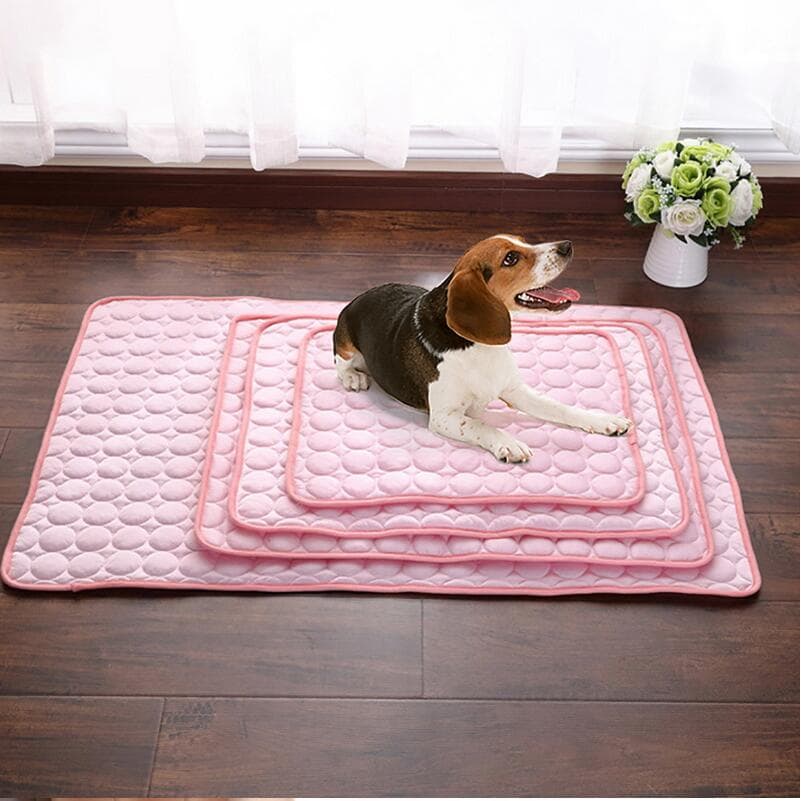
Pet Dog Cat Ice Silk Cold Nest Pad
Passive cooling where they already flop — no cords, no water.
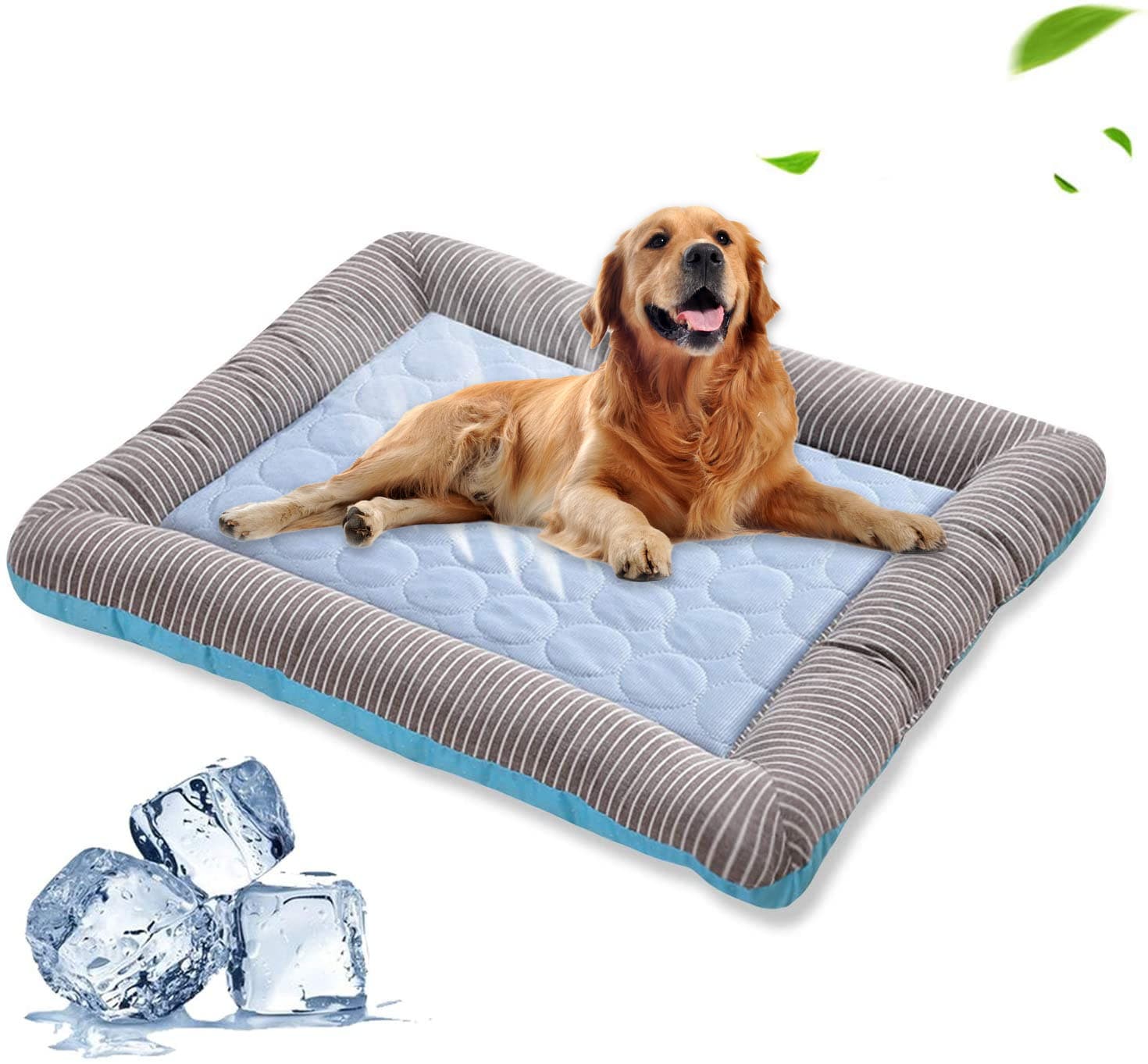
Pet Cooling Pad Bed
A cooler surface for pets who overheat on warm nights.
How we evaluate
We evaluate cooling products by use case, compare them against their published spec sheets, and test whether dogs actually choose them. We do not publish temperature-drop numbers we cannot verify, and products making unsupported thermal or medical claims do not get recommended.
Questions pet parents ask
How long does a cooling mat stay cool?
A passive mat does not run out of cooling the way a gel core saturates, but the spot under a motionless dog does warm up. Dogs handle this themselves by shifting position, which is also why a mat larger than the dog works better.
Do cooling mats work for cats?
The same way, yes. The smaller sizes of the ice-silk mats suit cats, and the same rule applies: the cat decides, so put it where they already sprawl in summer.
Are cooling mats safe for chewers?
Ice-silk mats have no gel to puncture, but they are still fabric and most are not chew-proof. For a committed chewer, use the mat during supervised rest and store it between sessions.
Do I need to refrigerate or wet a cooling mat?
No. Passive ice-silk mats work dry at room temperature. If a product needs refrigeration or soaking, it is a different category with different upkeep.
Related guides
Best cooling mats for dogs who run warm
The best cooling surface for most warm-sleeping dogs is a passive ice-silk mat sized so the chest and belly rest fully on it: cordless, waterless, and movable to wherever they flop.
How to keep your dog cool at night
To keep your dog cooler at night, move their bed away from trapped heat, keep water within reach, add airflow they can move away from, and offer a cooler surface: a passive ice-silk mat like the Pet Dog Cat Ice Silk Cold Nest Pad, laid where they already flop.